
Quick answer: Where are the best beach wedding destinations?
The best destinations for beach weddings are Greece (Santorini, Crete), Thailand (Koh Samui, Phuket), Spain (Mallorca, Ibiza), Croatia (Hvar, Dubrovnik), Portugal (Algarve) and Mexico (Tulum, Cancun). Expect to spend 12,000-40,000 EUR for 20-40 guests depending on destination and season.
Why choose a beach wedding abroad?
A beach wedding combines the best of both worlds: a romantic ceremony with the sound of waves as your backdrop and a destination that transforms your wedding into an unforgettable experience for all guests. Sand between your toes, sunset over the horizon, and salty breezes playing with the veil - it is hard to beat that feeling.
Beach weddings abroad have become increasingly popular among European couples in recent years. The advantages are clear: guaranteed better weather than at home, natural beauty as your backdrop instead of expensive decorations, and the opportunity to combine your wedding with a holiday for all guests. Moreover, beach weddings are often cheaper than traditional weddings at home thanks to lower prices for food, drinks and venues in many destinations.
But it requires planning. Choice of beach, tides, wind conditions, permits and logistics all play a crucial role. This guide takes you through everything you need to know - from the best beaches in 20+ countries to practical tips that will save the day.
Best beaches for weddings by destination
The Mediterranean - Europe's beach wedding paradise
Beach wedding in Greece tops the list for European beach weddings. Santorini's iconic caldera beaches with black volcanic sand and sunsets in gold and pink are unmatched anywhere in the world. Crete offers white sand beaches like Elafonisi and Balos with crystal-clear water at significantly lower prices. Corfu combines Venetian charm with green hills meeting turquoise sea. Best May-October, expect 18,000-45,000 EUR.
Beach wedding in Spain offers enormous variety. Mallorca's Cala Deia with cliffs and pine trees, Ibiza's Cala Comte with sunset views, and Andalusia's Costa del Sol with miles of sandy beaches. The Canary Islands provide year-round sun with volcanic beaches on Lanzarote and golden sand on Fuerteventura. Budget: 15,000-35,000 EUR.
Beach wedding in Croatia has crystal-clear Adriatic waters and hundreds of islands to choose from. Hvar's lavender fields meet turquoise coves, Dubrovnik's city beaches have Game of Thrones scenery, and Brac has the famous Zlatni Rat beach whose shape changes with the winds. Prices are 30-40% below Greece with the same quality of service.
Beach wedding in Portugal - Europe's most underrated beaches. The Algarve's dramatic cliff formations at Praia da Marinha and the Benagil cave create spectacular wedding photos found nowhere else in Europe. Comporta south of Lisbon is called "Europe's hidden beach" with miles of white sand and rice fields as backdrop. 20-30% cheaper than Spain and Greece.
Beach wedding in Italy - the Amalfi Coast with dramatic cliffs plunging into azure waters, Sardinia's emerald Costa Smeralda, and Sicily's wild beaches. Puglia in the south offers white sand beaches and masserie - historic farmhouses with infinity pools just behind the shoreline. Tuscany's Maremma coast is the hidden alternative with untouched beaches and cypress-covered hills.
Beach wedding in Cyprus combines the Mediterranean's best beaches with 340 days of sunshine per year. Nissi Beach features turquoise water and white sand, while the Paphos coast offers mythical beaches where Aphrodite is said to have risen from the sea. Beach wedding in Malta is perfect for intimate beach weddings with Gozo's dramatic cliff beaches and crystal-clear lagoons. Beach wedding in France - the French Riviera's glamour and Corsica's untouched beaches ranked among Europe's finest. Beach wedding in Turkey provides exceptional value with Oludeniz Blue Lagoon and the Antalya coast at 40-50% of Southern European prices.
The tropics - exotic luxury by the sea
Beach wedding in Thailand offers the best value tropical beach wedding in the world. Koh Samui has luxury resorts directly on the beach with palm-lined ceremony platforms and professional English-speaking wedding coordinators. Phuket provides dramatic cliff formations at beaches like Phranang and Kata Noi. Krabi has secluded beaches only reachable by longtail boat - perfect for elopements. Budget: 8,000-25,000 EUR including everything.
Read more: elopement guide for intimate ceremonies abroad
Beach wedding in Bali is synonymous with tropical beach weddings. Uluwatu's cliff temple above steep sea cliffs creates dramatic ceremonies with the Indian Ocean as backdrop. Seminyak's beaches have sunset cocktails and trendy beach clubs. Balinese decor with frangipani, bamboo and torches creates a magical atmosphere at no extra cost.
Beach wedding in the Maldives is the ultimate luxury destination for beach weddings. Private sandbanks surrounded by turquoise water, overwater villas with glass floors, and ceremonies on the beach at sunset. Exclusive but expensive: 30,000-80,000+ EUR. Beach wedding in Sri Lanka offers a more affordable alternative with pristine golden beaches at Tangalle and Mirissa, combined with cultural experiences. Budget: 6,000-20,000 EUR.
Beach wedding in Mexico - Tulum's bohemian luxury with Mayan ruins towering above white Caribbean beaches. Cancun's hotel zone offers convenient all-inclusive resort wedding packages. Beach wedding in Jamaica has Caribbean charm with Negril's famous Seven Mile Beach. Beach wedding in the Dominican Republic provides the most affordable Caribbean option with Punta Cana's white beaches. Beach wedding in Costa Rica combines tropical beach with rainforest, volcanoes and adventure at Manuel Antonio.
Beach wedding in Vietnam offers exotic charm at extremely low prices. Phu Quoc's pristine beaches, Da Nang's miles of coastline with Marble Mountains as backdrop, make it an emerging choice for budget-conscious couples seeking tropical luxury.
Unique alternatives for the adventurous
Beach wedding in Dubai combines luxury beach weddings with desert glamour and the world's most impressive skyline as evening backdrop. Beach wedding in South Africa has dramatic beaches at Cape Town where Table Mountain meets the Atlantic - Clifton Beach and Camps Bay are iconic. Beach wedding in Morocco offers Essaouira's windswept beaches with Moroccan charm. Beach wedding in New Zealand has dramatic black volcanic beaches and the cinematic Cathedral Cove.
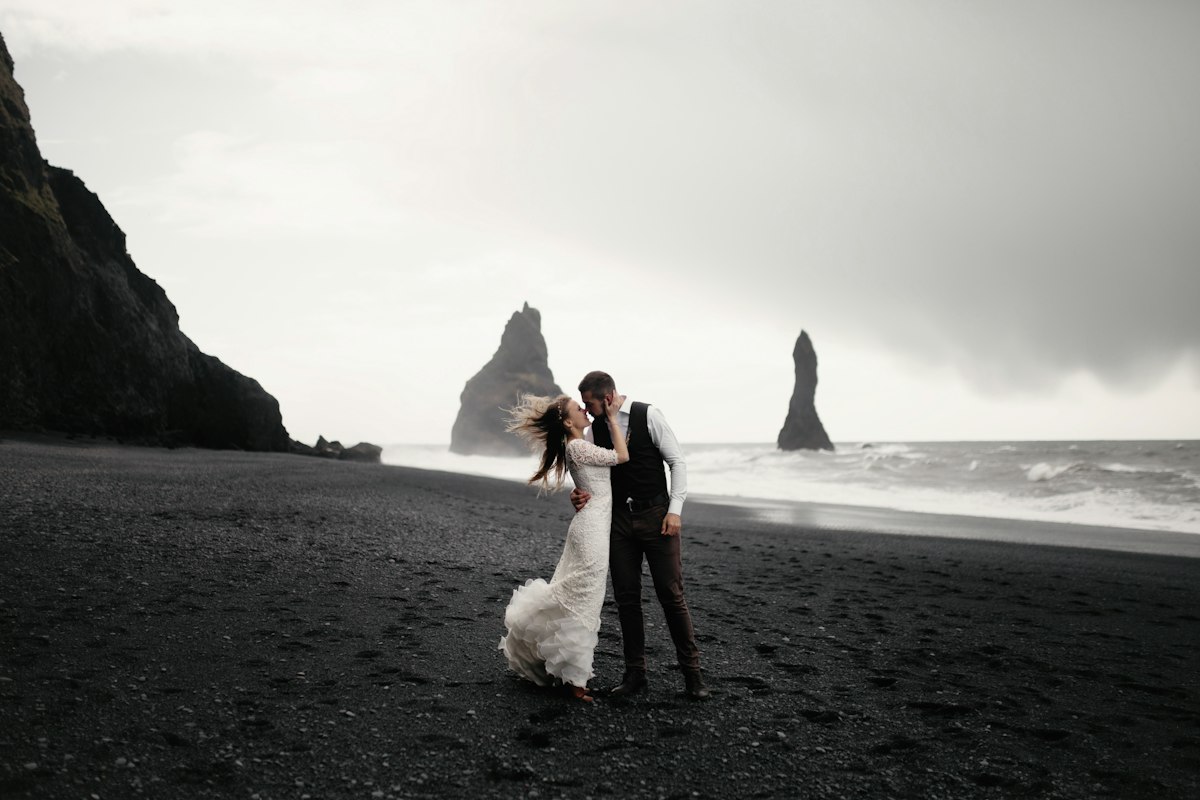
Nordic alternatives: Iceland has black beaches at Vik with dramatic basalt columns - perfect for elopements in wild landscapes. Norway offers white beaches on the Lofoten Islands with midnight sun during summer. Faroe Islands has remote beaches surrounded by dramatic cliffs for couples seeking total seclusion. And Switzerland offers lakeside weddings by crystal-clear alpine lakes as an alternative to ocean beaches.
Practical planning: Step by step
12-18 months before: Choose destination and beach. Visit the location if possible at the same time of year as your wedding. Check weather statistics, tides and permit requirements. Book a local coordinator who knows the beach - this is the most important decision you will make for the entire wedding.
10-12 months before: Book ceremony venue and reception. Arrange officiant (symbolic or legal). Book photographer with beach experience - beach wedding photography requires specialist knowledge of strong light, reflections and wind.
8 months before: Send save-the-dates with clear information about destination and dress code. Book flights and hotels - group bookings save 15-25%. Start planning beach-appropriate attire.
4-6 months before: Plan details - music, flowers, decor, food. Consider wind when choosing decor (no tall candle holders or loose paper decorations!). Plan a backup in case of bad weather. Arrange wireless sound system with microphone.
1-2 months before: Confirm all bookings. Make a test visit if possible. Plan exact timeline considering sun position, tides and wind patterns.
Music and entertainment on the beach
Beach music requires special consideration. Acoustic guitar or ukulele works perfectly for the ceremony itself - intimate, personal and requires no power supply. For the reception, wireless battery-powered speakers or a generator placed at a distance to avoid noise are needed.
DJ or band? A DJ is logistically simpler with less equipment to transport. But a small acoustic band with bossa nova, reggae or local music creates an unforgettable atmosphere no Spotify playlist can match. Steel drums in the Caribbean, bouzouki in Greece, gamelan in Bali - local musicians provide authentic atmosphere and often cost less than imported artists. Always check noise restrictions - many beaches have maximum levels and curfews, typically 10-11 PM.
Food and drink by the sea
The beach wedding menu should reflect the destination and embrace the local cuisine. Fresh seafood and fish straight from the sea, grilled on the beach, is always a winner regardless of destination. Tapas-style in Mallorca, seafood BBQ in Croatia, Thai curry buffet in Koh Samui, or ceviche in Mexico - let the destination guide the menu rather than importing food from home.
Drinks: Champagne in sand works surprisingly well, but avoid glass bottles on the beach (safety risk and often prohibited). Sangria in carafes, cocktails in coconut shells, or local wine in acrylic glasses work excellently. Plan cooling carefully - ice melts quickly in tropical heat. Portable cool boxes or buckets buried in sand are classic solutions that work. Many couples move dinner to a terrace or restaurant with sea view just beside the beach for better lighting, service and comfort.
Attire and styling for beach weddings
Beach wedding attire differs significantly from traditional weddings. The bridal gown should be light and airy - heavy tulle skirts and long trains do not work in sand and wind. Popular choices: A-line dresses in chiffon or silk, short dresses above the knee, or two-piece sets. Skip high heels - barefoot sandals, espadrilles or going completely barefoot is the beach wedding standard and looks fantastic in photos.
The groom can choose linen trousers and light shirt with rolled-up sleeves (the beach classic), shorts with blazer for casual vibes, or a light suit in pale colours like beige or light blue. Dark suits and ties do not work in 30-degree heat. Communicate dress code clearly to guests: "Beach formal" or "relaxed elegance" with tips about comfortable shoes, sunglasses and sun protection.
Common challenges and solutions
Wind: Beaches are almost always windy, especially in the afternoon. Anchor everything heavy - canopies, flowers, place cards. Choose heavy candle holders of glass or stone. Bride: choose a hairstyle that withstands wind, not loose hair. Consider a sheltered cove rather than an exposed open beach.
Tides: Check tide tables carefully for your wedding day. A ceremony planned at low tide with 50 metres of beach can become a ceremony with water around your feet at high tide three hours later. Plan ceremony time around the tide, not the other way around.
Sun and heat: Plan the ceremony late afternoon (4-6 PM) for best photography light and lower temperature. Offer parasols, fans and cold water to guests.
Permits: Many beaches require event permits, especially public beaches. A local coordinator handles all bureaucracy. Private beach resorts usually include permits in their wedding package.
Sound: Ocean waves are romantic but can drown out speeches and vows. A wireless sound system with microphone for the officiant and speakers pointed at guests is an absolute must, not an optional extra.
Want help planning step by step? Read our complete planning checklist. Wondering about costs? Check our detailed cost guide by country.
Costs: What does a beach wedding cost?
Beach weddings vary enormously in price depending on destination, number of guests and level of ambition. Here is a realistic overview for 20-40 guests including ceremony, reception, photographer, flowers and decor:
Budget (under 12,000 EUR): Thailand, Sri Lanka, Vietnam, Dominican Republic. All-inclusive packages at many resorts make planning easy. Fantastic quality at low prices thanks to local cost of living differences.
Mid-range (12,000-30,000 EUR): Croatia, Portugal, Turkey, Costa Rica, Mexico, Jamaica. Good balance between quality and price with professional wedding industry and experienced English-speaking coordinators. The most popular segment among European couples.
Premium (30,000-50,000 EUR): Greece, Spain, Italy, France, Cyprus, Dubai. Iconic settings with high expectations and matching price tags. Fantastic service and unforgettable photo opportunities.
Luxury (50,000+ EUR): Maldives, exclusive private beaches in Bali, boutique resorts in South Africa. Fully customised experiences without compromise.
Tips from experienced beach wedding couples
Visit at the exact same time of day as your planned ceremony. The beach can look completely different at low tide in the morning compared to high tide in the afternoon. Light, wind and crowds change dramatically throughout the day.
Hire a local photographer who has shot at your chosen beach before. They know exactly where the light falls best at what time, which rocks give the best background, and how to handle the beach's specific challenges. Budget: 1,500-4,000 EUR depending on destination.
Always have a Plan B. Even in the tropics, sudden rain showers can occur. A restaurant or terrace with sea view nearby works perfectly as an alternative. Most resorts include a backup venue in their wedding package.
Think about guest comfort - not everyone loves sitting in sand and sun for hours. Offer shade, water, sunscreen and comfortable seating. A 20-minute beach ceremony followed by cocktails by the water and dinner on a terrace above the beach is the perfect compromise.
Simple decor always works best on the beach. The sea and sand are already beautiful - you do not need to compete with nature. A simple flower arch, some torches in the sand and flowers along the aisle are more than enough. Excessive decor looks out of place on a beach and risks blowing away. Spend the money on a good photographer instead.
Wondering about the legal side? Read our guide to legally valid weddings abroad with rules and documents by country.
Related guides: Season guide. Photographer guide.
This guide is based on pricing data from our network of wedding suppliers across 24 countries and feedback from hundreds of couples. Published by the Wedding Abroad editorial team. Last updated March 2026.